Shipping container community libraries
librarymaxxing for philanthropists 2026-08-11 #books
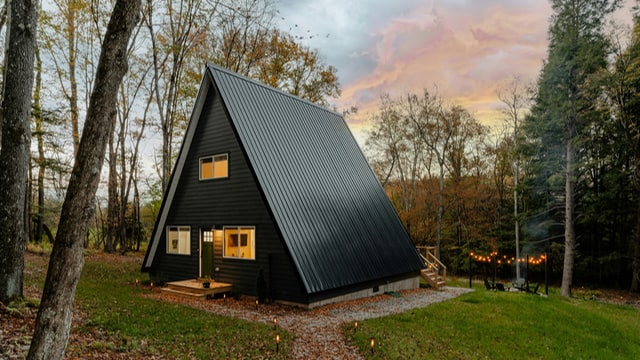
- Shipping container library
- Library layout
- Library capacity
- Community libraries ←
In this series, I’ve established that a shipping container library with an interesting layout can hold more than 5000 books. A five kilobook personal library may seem unnecessary, since you probably can’t read that many books in your lifetime. However, even if book people do prefer reading, libraries become fundamentally social places. The books want you to share them.
Book Aid International
Book Aid International knows why you need 5000+ books in a shipping container: for Community Container Libraries that ‘bring more books to the communities worldwide that will benefit from them the most’.
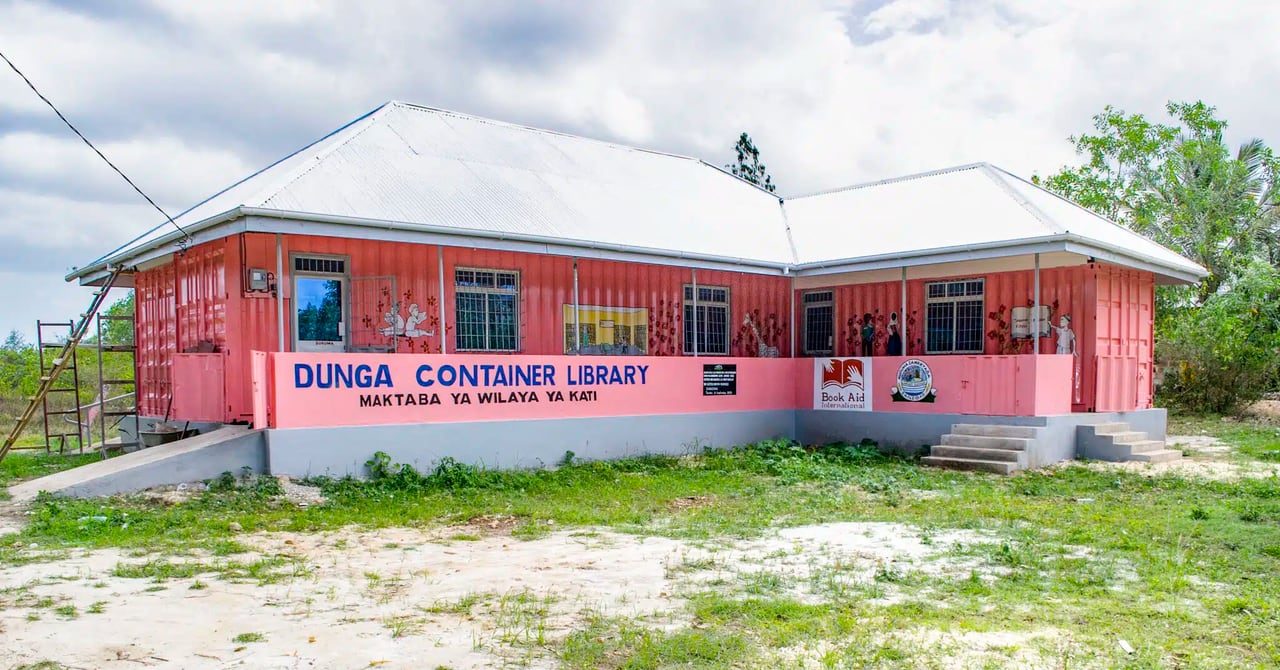
They’ve figured out how to source, install, and stock a shipping container library, such as the one pictured (photo, above) in Dunga, Zanzibar (population 76 000). This kind of custom cargotecture probably poses challenges that require expertise and persistence to solve, as well as a flexible budget. This sounds like an opportunity for scaling and standardisation.
Tiny homes
So far, the tiny-house movement has probably got us the closest to productising container-sized buildings. The niche idea of living in a really small home, for a small-footprint lifestyle, offers some combination of simpler, cheaper, location-flexible or more sustainable living.
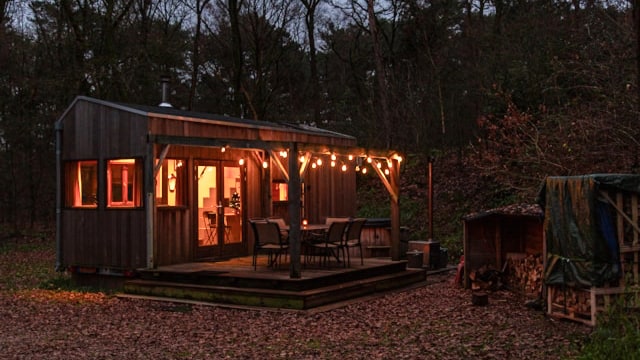
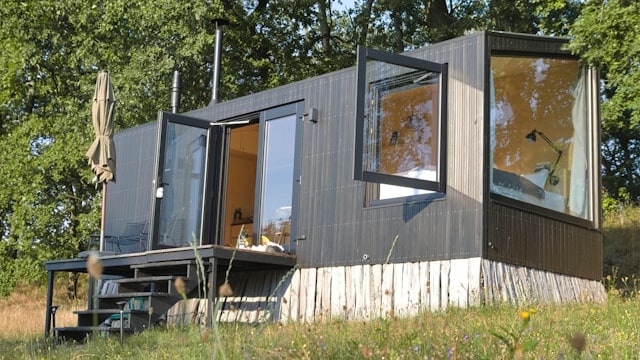
Tiny houses can also offer designer luxury: browsing 26 Modern Tiny House Design Inspirations For Your Tiny Home gives you more of a chic holiday home vibe than one about economically downsizing. You also get the Scandinavian design angle, which sells well, and makes sense given the market for well-off Scandinavian’s summer houses.
But when you browse beautiful tiny house photos, you realise the terrible cost of the small-footprint lifestyle. Tiny houses don’t have room for bookcases.
Tiny personal libraries
Start-up company idea: solve the problem of moving in to a tiny house and realising that you can’t live without a substantial quantity of books, for rich book people who like expensive design. While committing to a tiny-house lifestyle, they also think that books don’t count.
The successful tiny library start-up won’t settle for squeezing an unsatisfyingly small bookcase into a conventional tiny house design. Instead, they’ll sell you a container-sized add-on unit, kitted out as a luxury personal library, to connect to your tiny house. It will have enough room for all of your books, plus some kind of secondary collection. Whisky, maybe.
Tiny village libraries
A successful ‘hardback’ product for the luxury market might generate significant revenue, design and construction expertise, and economies of scale. This could potentially fund a more affordable ‘paperback’ product – tiny libraries for more price-sensitive markets:
- young professionals with disposable income, but not enough to buy a home big enough for their growing book collection
- holiday parks, because now matter how good their facilities, when you run out of books to read in the middle of your summer holiday, they never seem to have a decent library
- tiny house collectives, such as Rotterdam’s experimental De Kleine Burg (in Dutch), who want to share a tiny village library.
And these, of course, would only represent the next milestone on the ultimate business plan.
Community libraries
Mass-market tiny libraries would commoditise their construction. And more than that, imagine a business model that could fund widespread and cheaper community libraries for Book Aid International, and other charities.

