Consumer SaaS review: The StoryGraph
the independent book tracker 2026-01-27 #books #reading #review
- Unread books
- Unread bookcase
- Curating unread books
- Track unread books
- The StoryGraph ←
The StoryGraph offers an independent alternative to book web shops and other book trackers. I use it to track unread books, and to keep an inventory of books I own, so I don’t accidentally buy duplicates.
The StoryGraph has plenty of functionality that I don’t use, and don’t cover in this short review:
- reading statistics, based on progress, dates, genres, styles, etc.
- reading challenges, such as books or pages per year
- book recommendations and browsing by genre, style, format, and length
- social reading – followers, ‘buddy reads’, book clubs, etc.
- book giveaways – promotional prize draws for free books.
I could probably have fun with those, but they would take time that I would prefer to spend reading.
Adding books
I use The StoryGraph to keep track of three groups of books: books I own and have read, books I own but haven’t read, and books I’ve read but don’t own. Like many people who join The StoryGraph, I started by importing an export of my Goodreads library. Satisfyingly, this just worked, and I never looked back.
Adding a single book to The StoryGraph starts checking whether I already have it, before buying it. I search my owned books for a specific book by author/title, and then use the mobile app to scan (i.e. photograph) the barcode or cover.
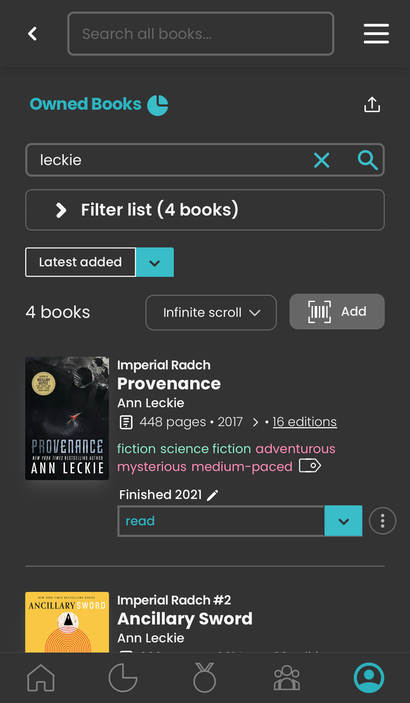
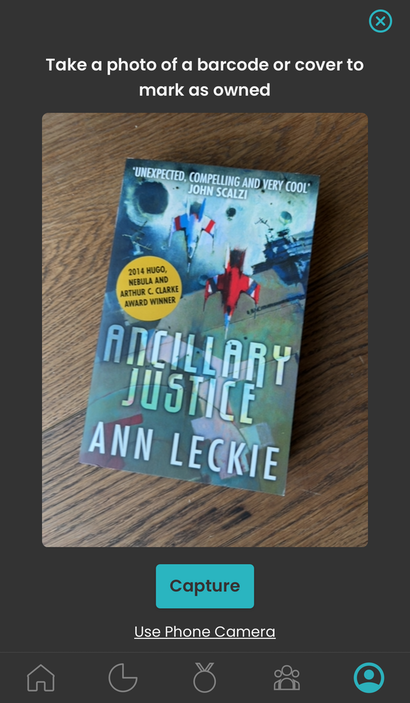
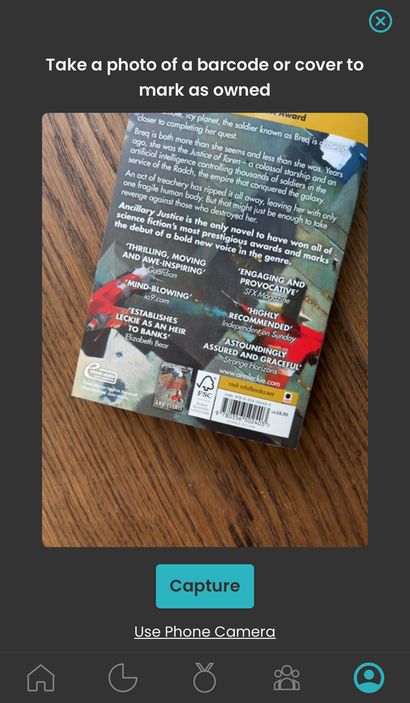
This feature previously became the killer app for using Goodreads, for me, and I like using it in The StoryGraph. Scanning the cover seems more reliable than the barcode, and more likely to select the correct edition. Scanning the barcode often misreads the ISBN.
Book details
On the book details page I later update the status to read, currently reading, or did not finish:
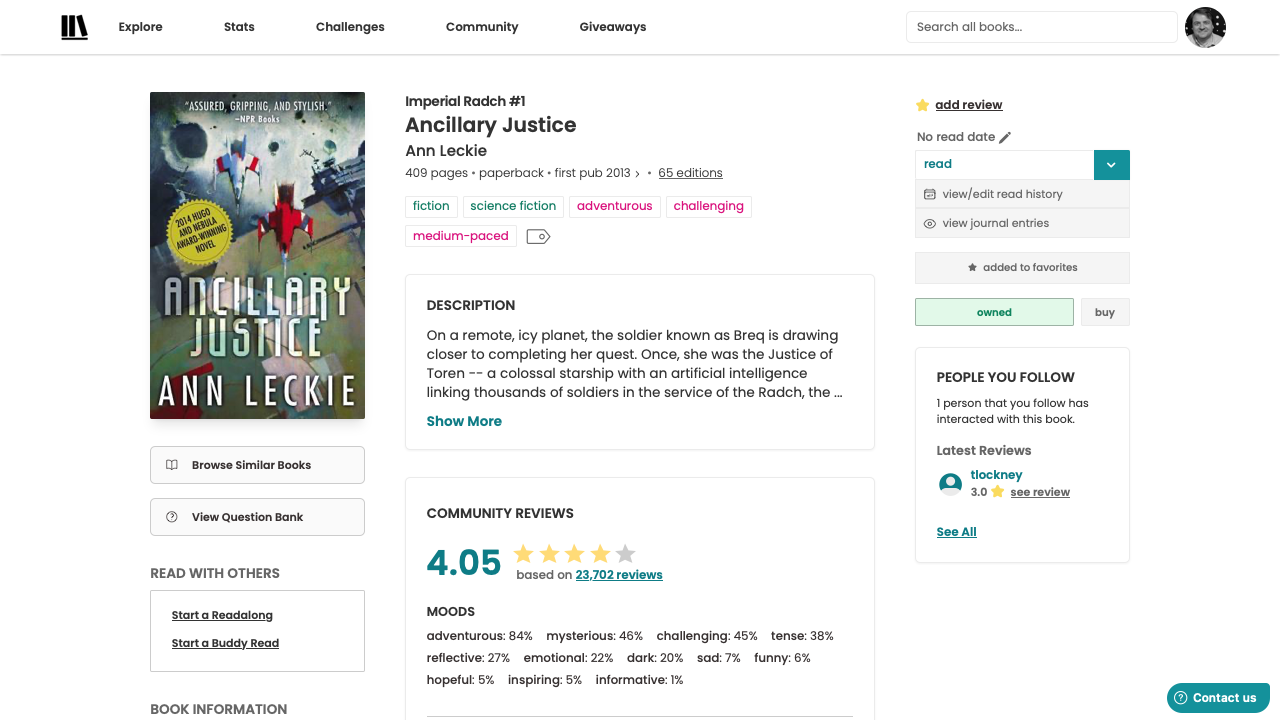
This populates the searchable Owned books list, which you can choose to restrict access to, or make public:
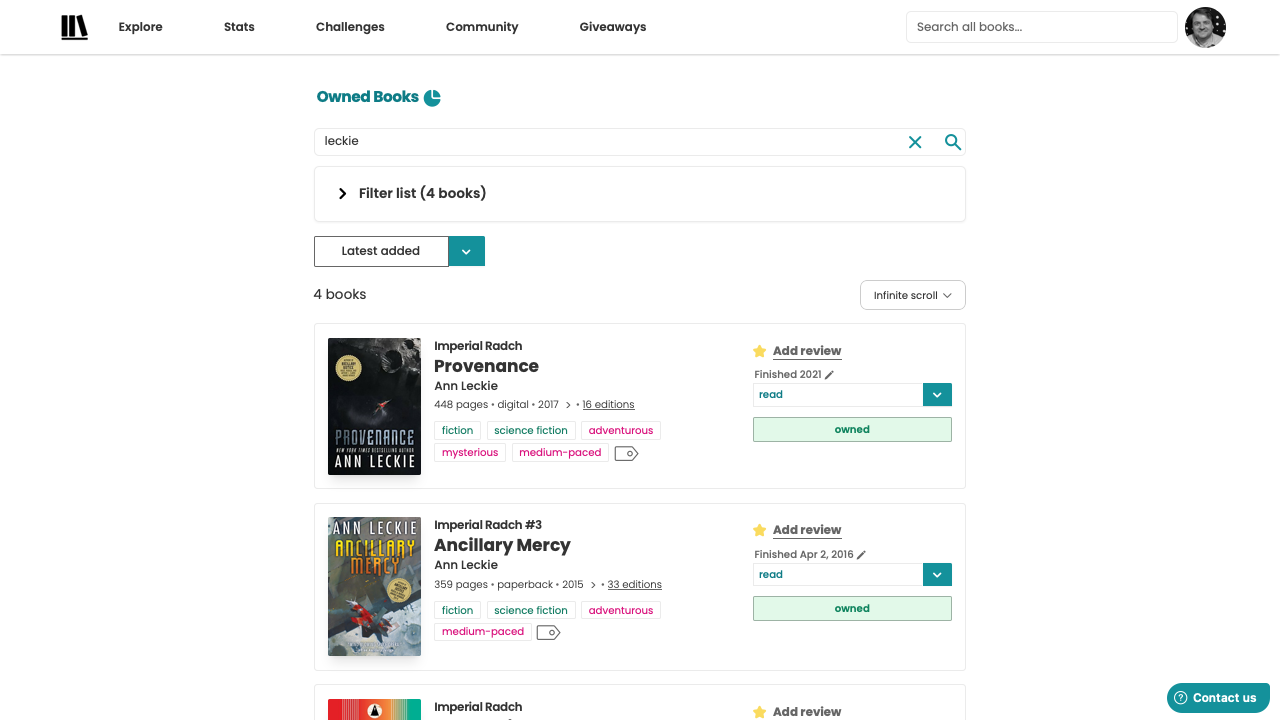
I like the straightforward user interface, including the clean UUID-based URLs. In particular, I love how the design avoids the online retailers’ cluttered page layouts, and colours that detract from the book covers. The design could have more internal consistency, though, such as fewer different font styles.
Editions & series
At home, I have a separate science fiction bookcase that contains many small-format paperbacks, with 1970s and 1980s cover art. My favourite StoryGraph feature, that online retailers don’t have, lets you choose a specific edition of a book, usually with the correct cover art. For example, my 1975 edition of Ursula K. Le Guin’s book, The Dispossessed:
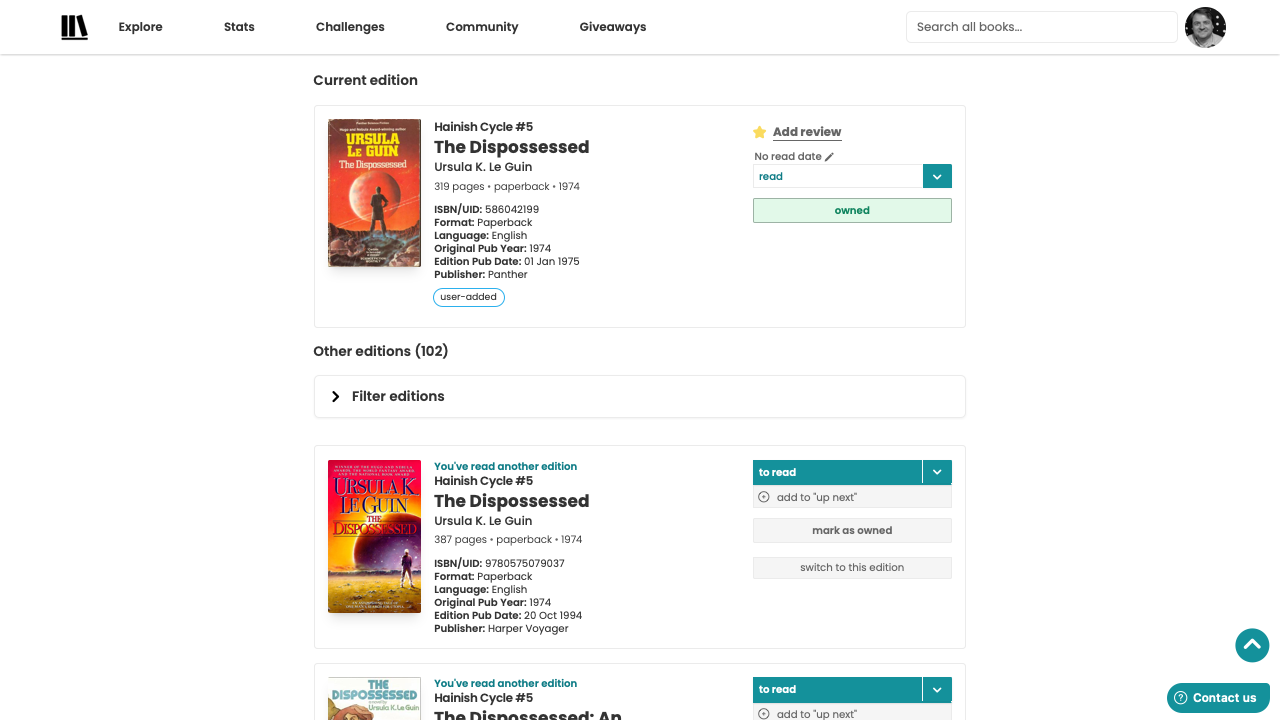
A more practical feature that I love links a book the series it belongs to. The Dispossessed, for example, appears fifth in Le Guin’s Hainish Cycle, which Hainish Cycle #5 links to.
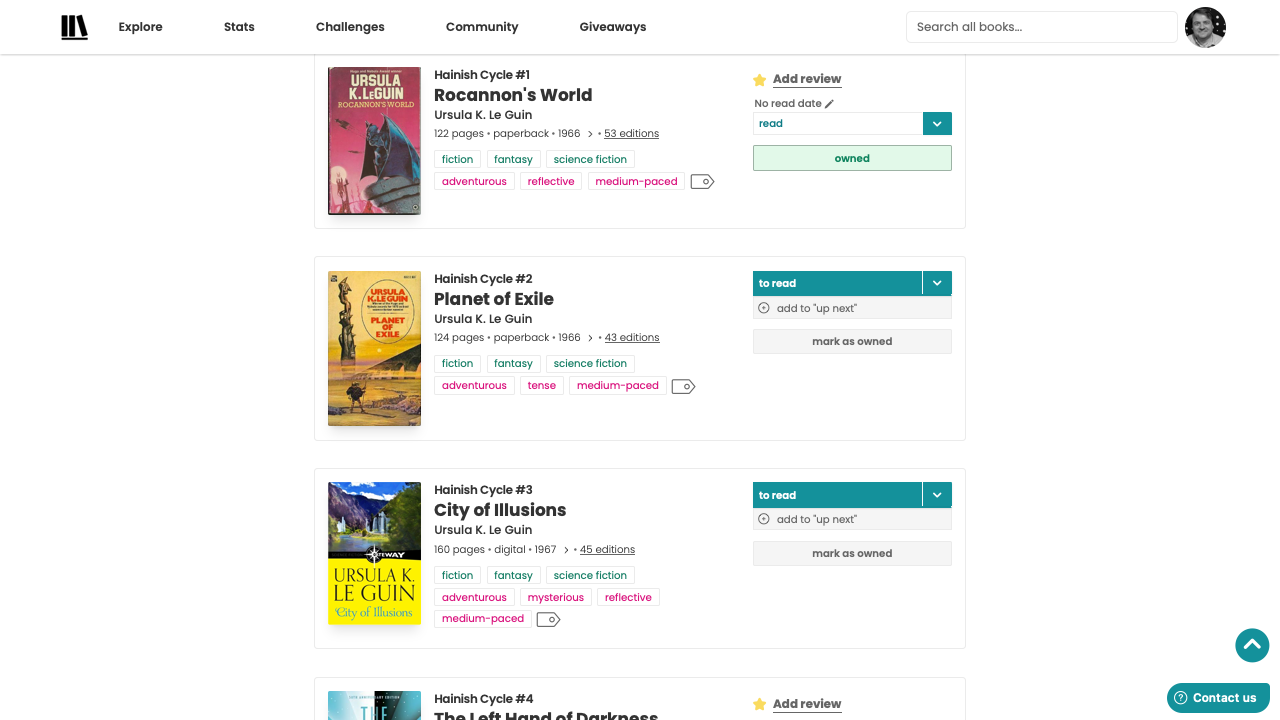
Not only do I find it useful to browse the series to see which ones I haven’t read yet, but I love seeing the other classic cover art.
Mission & support
The StoryGraph already had me at the mission: ‘an Amazon-free alternative to Goodreads’. Beyond that, it shows what a small focused team can achieve, and that simpler software alternatives can exist. I don’t actually need the additional features in the paid subscription, but will sign up after my free trial anyway, because I’d like to see more software like this in the world.

