Take your time
finding better ways than faster ways 2026-09-22 #product #development
Modern life fetishises saving time and doing things faster. So does modern business. We rationalise this, quite reasonably, by recognising that we only have a fixed amount of time in a working day, and in life in general.
Taking your time to do something exercises a privilege that not everyone has time for, but it can illuminate room for improvement. After all, better doesn’t always mean faster.
Travel
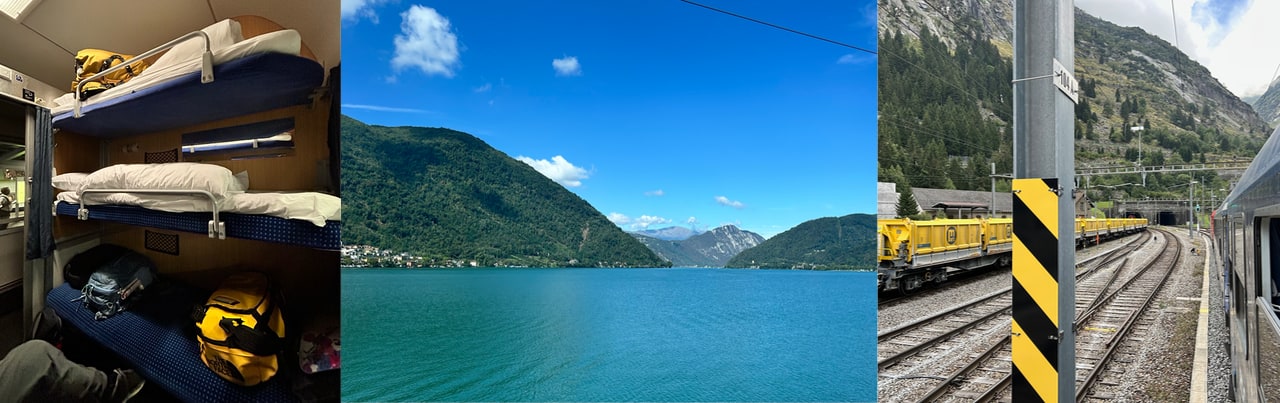
Last year, I flew to Northern Italy for a week-long music workshop. I met several people who had taken two days to travel from England by train, which inspired me to do the same. This year, I took the first departure of the new European Sleeper night train from Brussels to Milan (photos, above), as part of a 30-hour train journey.
Travelling by train initially seemed like a terrible idea: it cost slightly more than flying, and arriving by Friday afternoon meant leaving home on Thursday afternoon instead of Friday morning. However, I failed to predict the impact of the good things about the trip:
- the adventure of taking a night train for the first time
- spectacular views in Switzerland, especially alongside Lake Lugano and Lake Como
- avoiding the soul-destroying experience of spending time in two airports, twice each
- downtime to ease in and out of the holiday, and read two books (one each way)
- avoiding unnecessary flights.
When travelling becomes part of the holiday, slower travel can add value to the trip, instead of only costing time.
Cooking
The Slow Food movement promotes local restaurant cuisine, over fast food. Taking the time to cook your own food at home takes even longer than sitting in a restaurant, if you consider shopping for food, and having to cook a dish ten times before making a good job of it.
Like long-distance train travel, cooking for yourself has unexpected benefits. You can think more about ingredients, avoid ultra-processed food, and adjust recipes to your taste and nutritional preferences, such as for single-portion macaroni cheese.
When your choices about what you eat include choosing how you cook it, you can discover goals other than cooking quickly.
Software development
Everyone involved in software development has always wished that it cost less and didn’t take so long. Despite new innovations every seven years or so, the industry still struggles with developer productivity. This makes slowing down to speed up a hard sell.
In practice, software development tends to over-prioritise speed in the sense of not balancing cost against value. Building software faster doesn’t help if it doesn’t work, while building what your customers want increases value much faster than it increases costs.
From a programmer’s perspective, the following feel like they slow down software development.
- Learning about customers’ problems and needs
- Focusing on fewer (more valuable) development opportunities
- Aligning development with other teams and business strategy
- Collecting customer feedback and measuring customer behaviour
- Evaluating the actual value of changes to customer behaviour
When a software development team takes the time to make these things work, they discover unexpected benefits. They discover planned software development that customers don’t need, and work that they can simply not do.
When product management becomes part of software development, slower feature development can add more value to the software, than it adds cost to development.

