Dread by proxy
reflections on existential dread and the end of programming 2026-04-07 #programming
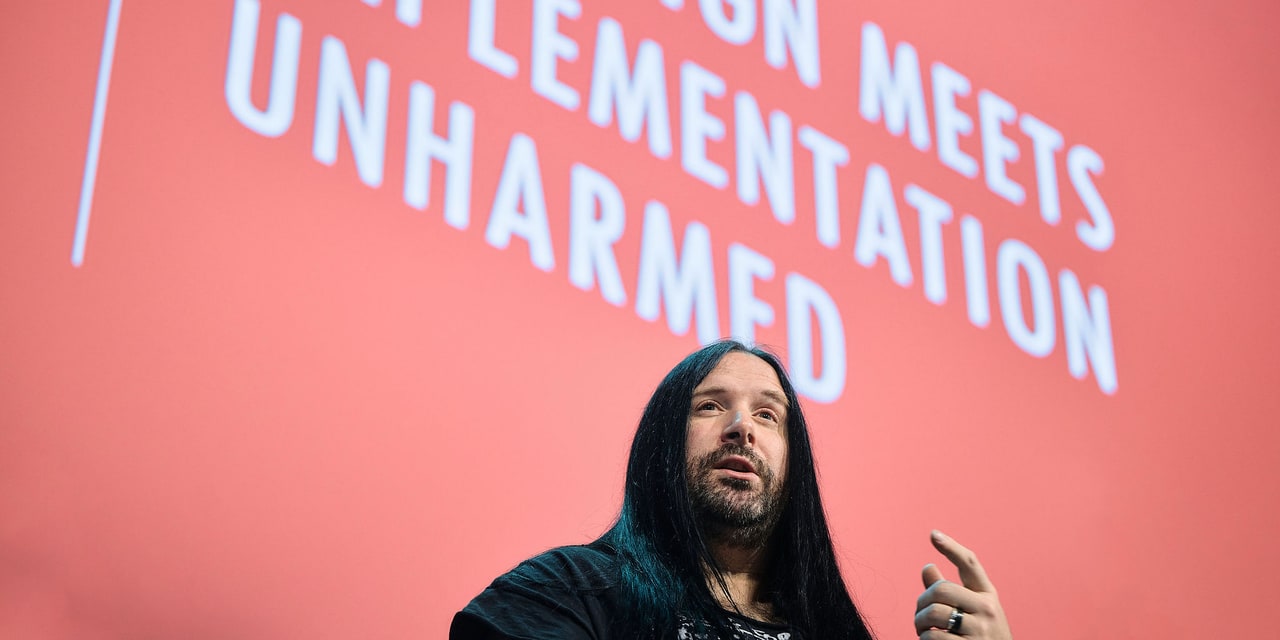
In his essay about ‘existential dread and the end of programming’, David Whitney (photo, above) narrates his change in perspective on programming with generative AI. He has mixed feelings:
I’m simultaneously having the time of my life building and am sat at my computer with the dread of looking at the end-times.
As a product manager, I don’t do programmers’ work, but I do work with programmers. And this dread breaks my heart.
Existential dread
Companies, and the people who work there, face existential dread at the prospect of their business model losing viability. More subtly, as a programmer, Whitney describes the dread at the prospect of not finding programming fun any more, as it threatens to become a kind of management task, coordinating AI tools:
I love programming.
And I think programming might be over and I don’t know what to do with those feelings.
I enjoy product management, and even the possibility of the imminent end of programming threatens to change that. It ruins the party for many programmers, whatever actually happens next.
The maintenance bargain
I feel a kind of dread by proxy, but if the programmers lose heart, I wonder who will maintain software in the future. I don’t mean _who will maintain the code, _because maybe humans won’t have to, but who will manage functional changes.
Low-code and no-code platforms have found new ways to reduce the need for coding for decades, often by automating specific problems, such as online forms. But anything remotely complex solution requires maintenance, and nobody wants to do that, even if it doesn’t require coding.
Programmers make _the maintenance bargain, _when they agree to maintain software that they write. Open source software, in particular, relies on this. But if existential dread makes these programmers lose heart, I fear for software maintenance.
Dread by proxy
As a product manager, I love doing my work when the programmers love doing theirs, and fear changes that upset that. Programmers’ existential dread spills over, and their fears that they’ll stop enjoying their work become mine, even if they drive the AI agents instead of me. I feel dread by proxy.
Similarly, I don’t enjoy the many things that threaten designers’ joy in their work. Not everyone feels this; I’ve worked in companies where people assume that other people have easy jobs, and don’t care if they have fun at work.
Cause for optimism
Programmers hate technology progress sometimes, clinging to writing programs in plain text files, and reading them in terminal emulators, and in monospace fonts. Fortunately, software development has always had room for these eccentricities, because most of the technology doesn’t become a limiting factor.
Perhaps software development’s eccentricities should surprise us more, as if tennis players could still win world tournaments with vintage wooden rackets. But steampunk software development also gives cause for optimism, in the face of dread. History suggests that programmers will continue to find ways to make software development fun.

